


- Version
- Download 27
- File Size 3.62 MB
- File Count 1
- Create Date September 25, 2026
- Last Updated September 25, 2026
Belize Spiny Lobster (Panulirus argus) Fishery Management Plan
Belize City, Belize - November 22, 2025
Prepared By:
The Belize Spiny Lobster (Panulirus argus) Fishery Management Plan has been prepared by Kendra Karr of Pincoya Solutions, at the request of the Belize Fisheries Department, Ministry of Blue Economy & Marine Conservation, and WWF-US, in support of the Project Finance for Permanence (PFP) initiative. This fishery management plan has been revised and endorsed by the Belize Fisheries Department.
Introduction:
Fisheries accounted for 0.5% of Belize’s GDP in 2023, with the dominant fisheries being Caribbean spiny lobster and Queen conch (Government of Belize, 2025). According to the Ministry of Blue Economy and Civil Aviation, Belize produced 647,134.84 pounds of live spiny lobster in the 2023-24 season. Of this amount, 589,425.51 pounds comprised lobster tails, and 149,543.01 pounds of whole lobster. The total earnings from all lobster fishing (including spiny lobster) in the 2023-2024 season were $36 million BZD (BFD, 2025).
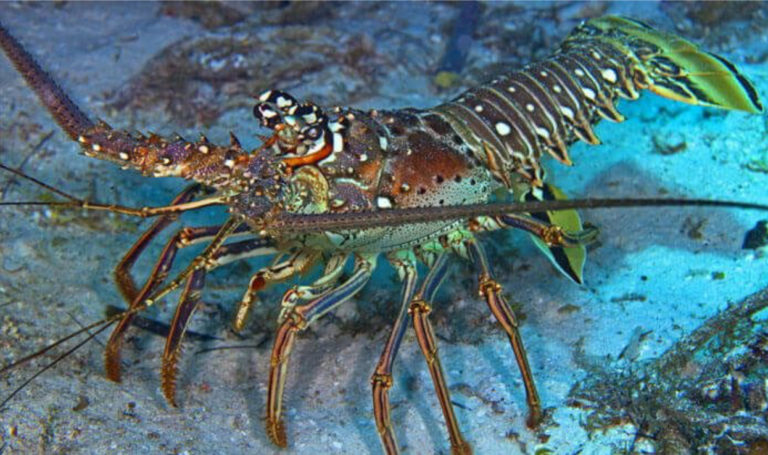
The spiny lobster (Panulirus argus) fishery is Belize's most significant small-scale artisanal fishery, accounting for 67% of the country's capture fishery export earnings. The lobster fishery is regulated through harvest control measures, including closed seasons, size restrictions, gear prohibitions, and no-take areas. Free diving using hook sticks and wooden traps are the most common gear for harvesting lobster (>90% of extraction). Other gear
includes “shades” (artificial shelters that attract lobsters), drums, tires, and casitas. The commercial lobster fishery began in the mid-to-late 1950s. Catches increased rapidly; in the past decade, the catch has stabilized at around 750,000lbs/400 tons per year of processed lobster. Most of the catch is exported, mainly to the United States.
Implementation Plan:
The Belize Spiny Lobster fishery plays a vital role in national food security, coastal livelihoods, and the Blue Economy. To ensure its long-term sustainability, this management plan outlines a structured and adaptive implementation approach centered on Total Allowable Catch (TAC), effort controls (licenses and traps), and updated biological regulations, including size limits. The proposed implementation plan is a recommendation; the Fisheries Department and partners will review the timeline and proposed activities, then support stakeholder outreach to finalize the implementation plan.