


- Version
- Download 6
- File Size 1.84 MB
- File Count 1
- Create Date September 25, 2026
- Last Updated September 25, 2026
Belize Queen Conch (Strombus gigas) Fishery Management Plan
Belize City, Belize - November 22, 2025
Prepared By:
The Belize Queen Conch (Strombus gigas) Fishery Management Plan has been prepared by Kendra Karr of Pincoya Solutions, at the request of the Belize Fisheries Department, Ministry of Blue Economy & Marine Conservation, and WWF-US, in support of the Project Finance for Permanence (PFP) initiative. This fishery management plan has been revised and endorsed by the Belize Fisheries Department.
Introduction:
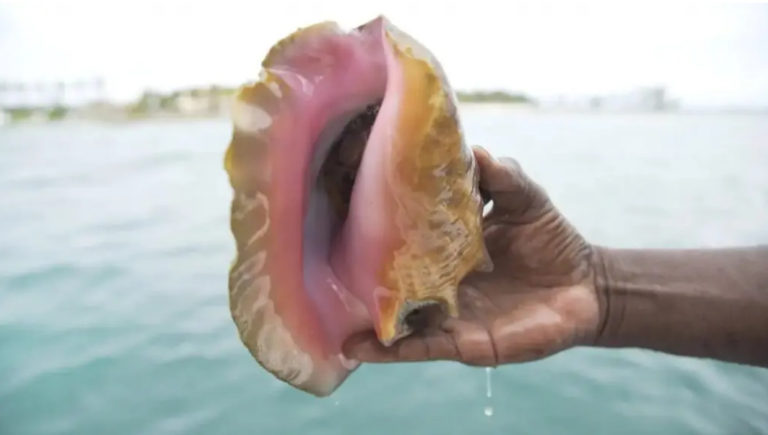
The Queen Conch is commonly referred to as Strombus gigas or Lobatus gigas and more recently as Aliger gigas — all are taxonomically interchangeable. CITES continues to list Strombus gigas in its official listings and trade documentation; therefore, this fishery management plan will also use Strombus gigas. The Queen Conch (Strombus gigas) fishery is the second most important commercial fishery of Belize. The fishery is seasonal, operating from October 1 through June 30 of the following year, but it will close earlier once the national conch quota is reached. The fishery is artisanal in nature; the main fishing grounds are along the Belize Barrier Reef Complex and at the three atolls (Turneffe Atoll, Glovers Reef Atoll, and Lighthouse Reef Atoll).
The Queen Conch is a critical fishery resource, supporting livelihoods, promoting food security, and contributing significantly to Belize’s economy. In 2024, 3,701 licensed fisherfolk and their immediate families were employed across all fisheries in Belize, totaling about 17,000 Belizeans.
The conch is harvested by free diving along coral reefs and seagrass meadows at depths ranging from 5 to 60 ft. The fishing fleet consists of 8-12-meter wooden sailboats equipped with sails and outboard engines (15-40 Hp) that carry 6-10 fisherfolk on fishing trips lasting 6 to 12 days. Each sailboat carries 8-10 wooden canoes, which are used by individual fisherfolk to search and harvest conchs. The fishing fleet also includes 6 – 8.5 meters skiffs (made of fiberglass or wooden) equipped with outboard engines (25-60 Hp) and a crew of 3 fisherfolk; and fishing trips last 1 to 2 days.
Conch meat landings have increased gradually over the past 27 years, from 251,352 lbs in 1986 to 942,293.7 lbs (427.42 MT) in the 2023-2024 season (Figure 1). In 2023, approximately 904,900 pounds of conch meat were exported, generating an estimated USD $6.6 million in revenue (BZD $13.20 million). Management regulations for conch include minimum size (shell length of >178 mm, market clean fillet of >3 oz, unprocessed conch >7.5 oz, fully-processed fillet >2.75oz), a closed fishing season (July 1st – September 30th), annual quota, and prohibition of use of SCUBA for commercial fishing.
Implementation Plan:
The Queen Conch fishery is a critical part of Belize’s Blue Economy, providing food security, livelihoods, and export income, particularly through trade to international markets However, ongoing concerns regarding depletion level, latent fishing pressure, and international trade restrictions necessitate a precautionary, adaptive, and socially equitable management approach. The proposed implementation plan is a recommendation; the Fisheries Department will review the timeline and proposed activities, then support stakeholder outreach to finalize the implementation plan.